
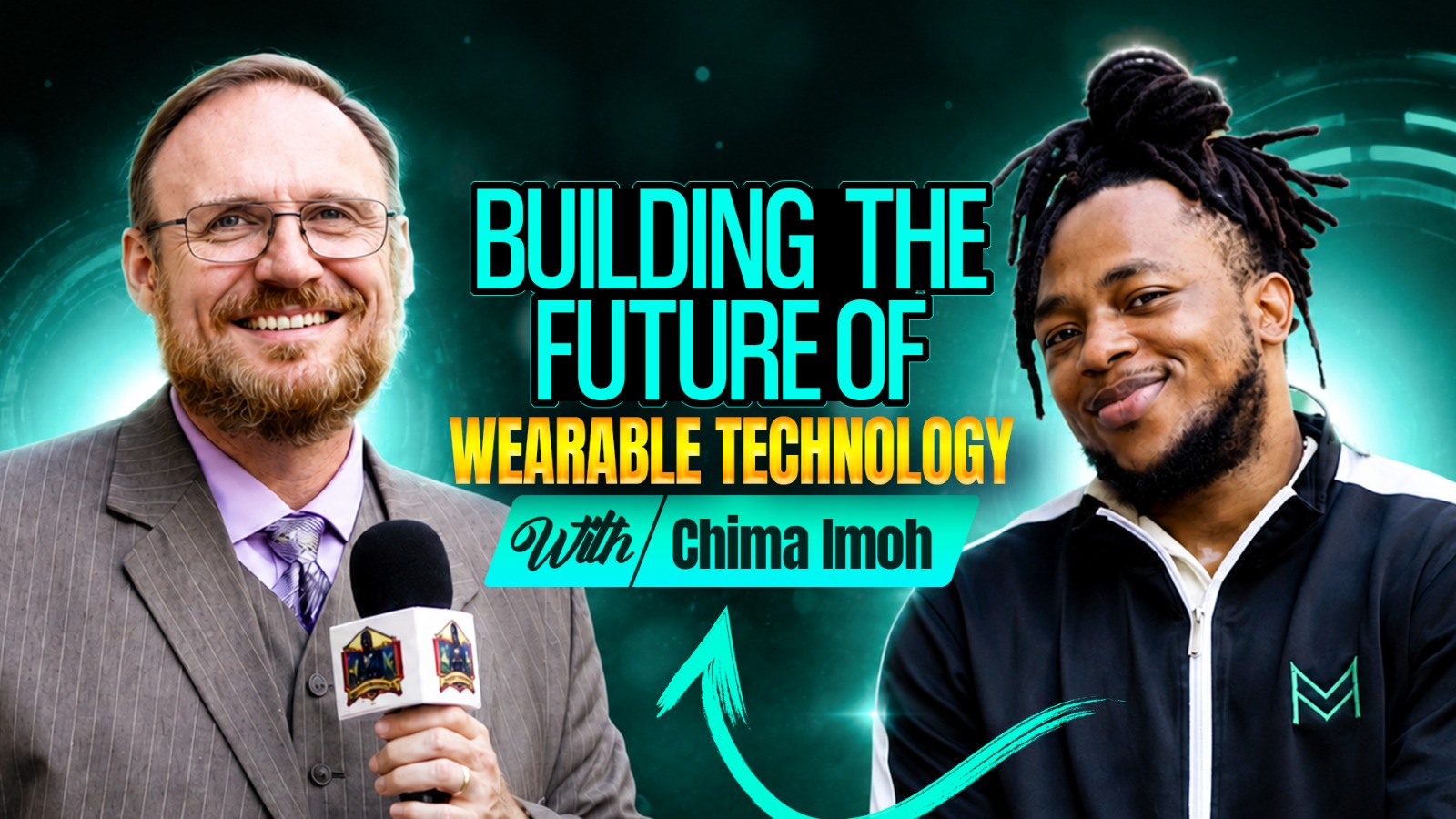
Building the Future of Wearable Technology with Chima Imoh
I chat with Chima Imoh, founder and CEO of MíMíroír Technologies, a Charleston, West Virginia company developing wearable technology. Our conversation covers the technology his company is building, the path that brought him into entrepreneurship, the progress MíMíroír has made, and the lessons he has learned while building a company. Chima’s story connects technology, medical science, business, faith, and the process of rebuilding his life after spending ten years incarcerated. Throughout our discussion, we return to the importance of relationships, learning, personal investment, and building trust with the people who support a business.
MíMíroír Technologies is working on a different approach to wearable devices. Chima believes many current wearables collect data from one part of the body while attempting to make conclusions about another. A smartwatch may sit on a person’s wrist while trying to calculate information connected to the feet or other areas. His company is developing a modular system designed to place the sensor where the activity is happening.
The system uses small pods that can move between different form factors. A device could be placed in footwear, attached to a wrist brace, or used through another clip-on application. Instead of forcing one wearable to handle every measurement from the same location, the system changes where the sensor is positioned based on what the user wants to track. The pods connect through Bluetooth to an app, allowing the company to collect and use the information generated by the device.
That product has moved from an idea toward a working system. When I first met Chima about six months before this conversation, the technology was still a concept. He now has physical pods and an app that can interact with them. The system can be used for activities such as games and running while tracking information through the application. That progress shows how much development can happen when an entrepreneur moves from planning into execution.
Chima’s path into entrepreneurship did not begin in a traditional startup environment. At 18, he got into trouble after stealing phones and spent ten years incarcerated. That time gave him an opportunity to think about what he wanted his life to become when he returned home. He wanted his future to demonstrate that one period of his life did not have to determine everything that followed.
Before starting the company, much of his interest centered on medical science and the type of work associated with doctors and surgery. Entrepreneurship gave him another way to remain connected to that interest while developing a new interest in business. MíMíroír Technologies brings those areas together through a product built around technology, health information, and human movement.
The company has also started forming relationships that could help it move into its next stage. Chima discusses a partnership with Shop Line and shares that MíMíroír has been accepted into the Level Up Labs accelerator program. These developments represent another step from having a concept toward building the business structure, connections, and resources needed to bring a product to market.
We also discuss what Chima has learned about business itself. He had some academic exposure to business before becoming an entrepreneur, but he found that textbooks could not prepare him for the daily reality of operating a company. One of the biggest differences is the role relationships play. Potential customers and clients do not only evaluate an idea. They also want to understand the person behind it and trust that the person can deliver on the vision.
When I ask about the best investment he has made in his business, Chima points to himself. Entrepreneurs may begin without outside funding, which means much of the first investment comes through their own time and effort. He describes this as sweat equity. His point is that founders have to believe enough in what they are building to put their own work behind it before expecting other people to believe in it.
Technical knowledge is another area he considers important. Chima does not believe every founder needs to become the company’s chief technology officer, but entrepreneurs should understand enough technology to communicate with the people handling that side of the business. This becomes more important as software and artificial intelligence become part of more industries. Even companies that do not think of themselves as technology businesses may depend on these tools.
Chima also views entrepreneurship as a continuing education process. He has worked on coding, business, legal issues, and other areas required to move the company forward. His current focus is fundraising. MíMíroír has opened a pre-seed round, and raising investment has created another learning process. It requires him to develop skills that were not necessary during earlier stages of the company.
Faith remains central to how Chima approaches both his life and his company. When I ask him for one belief he holds even when other people disagree, his answer is that God is good. He connects that belief to his journey from incarceration into entrepreneurship and to his responsibility to his family. He sees what he is building as part of something larger than himself.
My conversation with Chima Imoh is ultimately about more than developing a wearable device. It is about moving from an idea to execution while continuing to learn along the way. MíMíroír Technologies has progressed from a concept to physical hardware, an application, partnerships, an accelerator program, and the beginning of a fundraising effort. Behind those milestones is Chima’s decision to invest in himself, build relationships, understand technology, and continue developing the skills his company requires. His experience shows that entrepreneurship depends on more than having an idea. It requires trust, work, learning, persistence, and the willingness to keep building as the challenges change.