
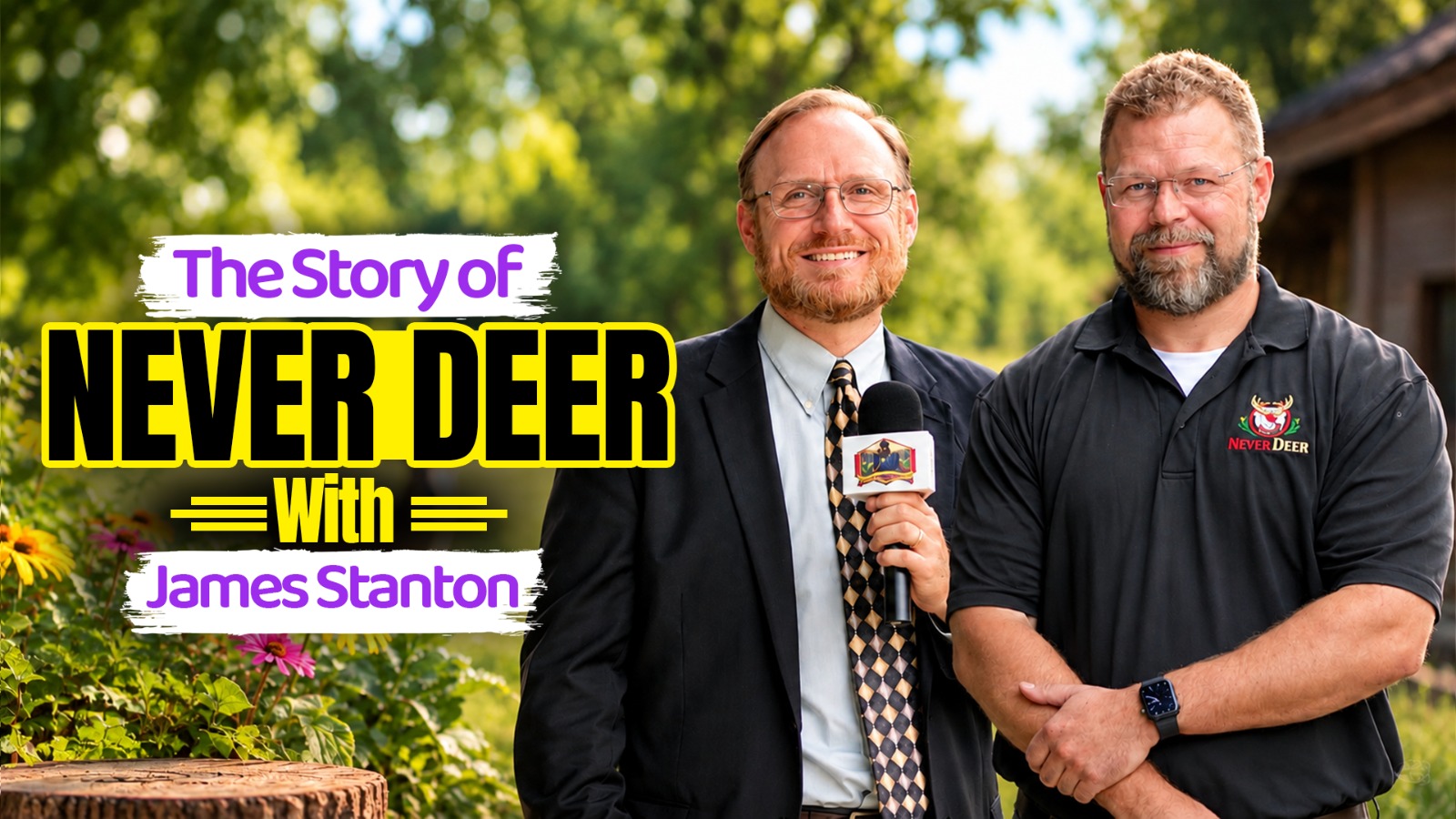
The Story of Never Deer with James Stanton
James Stanton built Never Deer around a problem that started at home. His wife’s plants were being eaten by deer, and he began looking for a solution. That experiment grew into a West Virginia business producing a deer repellent designed for homeowners, landscapers, forestry professionals, and others who need to protect plants. Our conversation covers how the product developed, what James has learned about running a business, and why sales, relationships, and asking for help matter as much as the product itself.
James comes from a background in wildlife and fisheries management and has worked in stream and wetland restoration. That experience gave him knowledge of wildlife and the outdoor industry, but manufacturing and sales were new areas when he started Never Deer. He began working on the product in 2025, launched the business at the beginning of 2026, and moved into it full time in late April.
Never Deer is a spray repellent that can be applied to flowers, trees, and edible crops. James designed it around three problems he saw with other products. It does not have a strong odor, it does not wash off in the rain, and one application can last for months. The product is manufactured at his facility in Big Chimney, West Virginia.
One of the ideas behind the company is making products that were once limited to specialty markets available to more people. James discovered that deer repellents used in forestry and agriculture can work, but many homeowners never see them. They are often sold through specialty suppliers and can be expensive. His goal is to offer a professional-grade option that a homeowner can purchase and use.
Building the product has only been part of the work. James learned early that having something that works does not mean people will know about it or buy it. He spends more time on sales, outreach, and relationship building than he expected. That has been one of the biggest differences between what he imagined business would be and what he has experienced.
He has also learned the limits of trying to do everything himself. Like many business owners, James started out handling sales, manufacturing, packaging, design, regulatory work, and other responsibilities. He found that asking for help and building relationships can keep an entrepreneur from becoming overwhelmed.
Programs and economic development organizations have been part of that process. James has worked with Advantage Valley and other resources to get assistance with areas such as web design and marketing. He continues to discover organizations and people who can help with parts of the business he is still learning.
Scaling creates another challenge. James has to decide when to hire, what to delegate, what to continue doing himself, and how much capacity to build before demand arrives. At one point, the largest commercial landscaping distributor in the country was testing his product with commercial clients while he was still producing it in his garage. That created the question many growing businesses face: how much should you prepare for growth before you know how much business is coming?
Some of his early lessons have been simple. The first money he spent on ingredients became one of his best investments because it allowed him to test the idea that became Never Deer. On the other hand, he spent too much time researching machinery and equipment that the business did not need yet.
The skill James keeps coming back to is the ability to talk with people and build relationships. He believes entrepreneurs need help, connections, and trust to move forward. That same idea shapes how he deals with customers. He tries to set realistic expectations, answer questions, avoid overselling the product, and stand behind what he produces.
James Stanton’s experience with Never Deer shows how a business can begin with one problem and grow into something much larger. The product matters, but the business also depends on sales, relationships, outside help, trust, and knowing when to scale. His experience is another reminder that entrepreneurship means learning skills far beyond the original idea and figuring out which responsibilities to keep, which to delegate, and when to ask other people for help.