
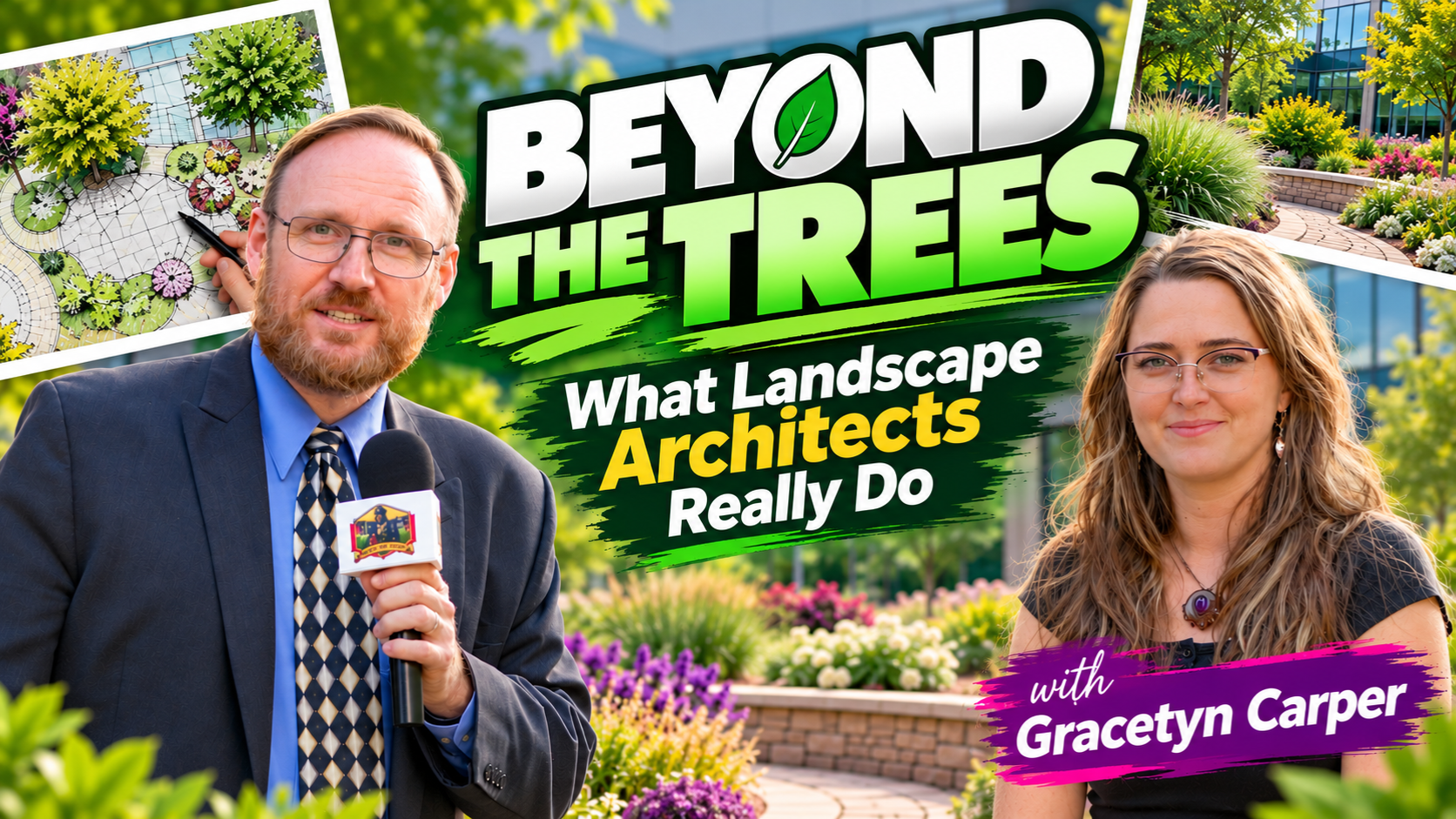
Beyond the Trees: What Landscape Architects Really Do with Gracetyn Carper
Landscape architecture shapes the spaces people use every day, from parks and trails to sidewalks and streets. Gracetyn Carper works in this field, helping communities across West Virginia create spaces that support recreation, transportation, and quality of life. I spoke with Gracetyn about what landscape architects do, how projects move from concept to construction, and what she has learned about design, planning, and professional development.
One of the misconceptions about landscape architecture is that it focuses on planting trees and designing parks. The work goes beyond landscaping. Landscape architects coordinate with civil engineers, geologists, architects, and other professionals to plan spaces that serve the people who use them. Their responsibilities often include project management, bringing together the people and resources needed to complete a project.
In West Virginia, much of this work involves grants that fund projects for communities. These projects can include parks, trails, streetscapes, and transportation connections. Some address needs such as building sidewalks that allow children to walk to school. Others focus on drainage, stream washouts, and watershed management. The goal is to solve problems while creating spaces that people can use.
The Charleston Connector is one example of how landscape architecture can influence a community. By connecting areas throughout Charleston, the project aims to provide opportunities for exercise, recreation, and travel. Projects like this demonstrate how planning can influence the way residents interact with their surroundings.
When Gracetyn entered the profession, she expected to spend much of her time designing projects and exploring concepts. The reality has required more attention to budgets, site conditions, and the needs of the people who will use each space. A design must work within the limits of the project while addressing its purpose.
That experience has also changed her approach to the design process. Early in her career, she believed her first design might be the one that worked. She learned that reaching a final plan requires revisions, research, and collaboration. Each site presents conditions that can change the direction of a project. Understanding those conditions is part of developing a solution.
Technology has also influenced how she works. When I asked about the best money she had spent in her profession, her answer was an Apple Pencil. Landscape architecture has roots in hand drafting and rendering, but computer graphics now play a role in the process. The Apple Pencil allows her to combine drawing techniques with digital tools, creating plans that maintain the appearance of hand-rendered work.
Another lesson has been learning not to do everything at once. Landscape architecture involves disciplines and responsibilities, making it tempting to take on too much. Gracetyn has found that limiting herself to one area can also restrict opportunities to learn. Finding a balance between developing skills and exploring different parts of the profession remains part of her growth.
Mentorship is another part of that development. Gracetyn believes professionals should be willing to learn from people with more experience. Entering a design field can bring confidence in one’s ideas, but experience provides knowledge that cannot come from education alone. Mentors can help professionals understand the planning process and approach problems from other perspectives.
Communication is a skill she continues to develop. She has made public speaking a priority because presenting ideas requires an understanding of the audience. Landscape architects must communicate with people who have different interests, needs, and levels of knowledge about a project.
Planning remains a principle behind her approach to work and life. Rather than starting without preparation, Gracetyn prefers to research, organize resources, and understand the process before moving forward. That preparation helps her identify what a project requires and what challenges might arise.
For anyone interested in learning about the profession, Gracetyn recommends the American Society of Landscape Architects, which also has a West Virginia chapter. The organization offers examples of projects and information about how the profession serves communities.
My conversation with Gracetyn reinforced how much thought goes into spaces we often take for granted. Landscape architecture combines design, engineering, research, and project management to address community needs. Her experience also offers lessons that apply beyond her profession: prepare before starting, recognize that the first idea may not be the final solution, learn from others, and continue developing skills. Whether the project involves a sidewalk, a trail, or a park, the purpose is to create spaces that improve how people live and connect with their communities.