
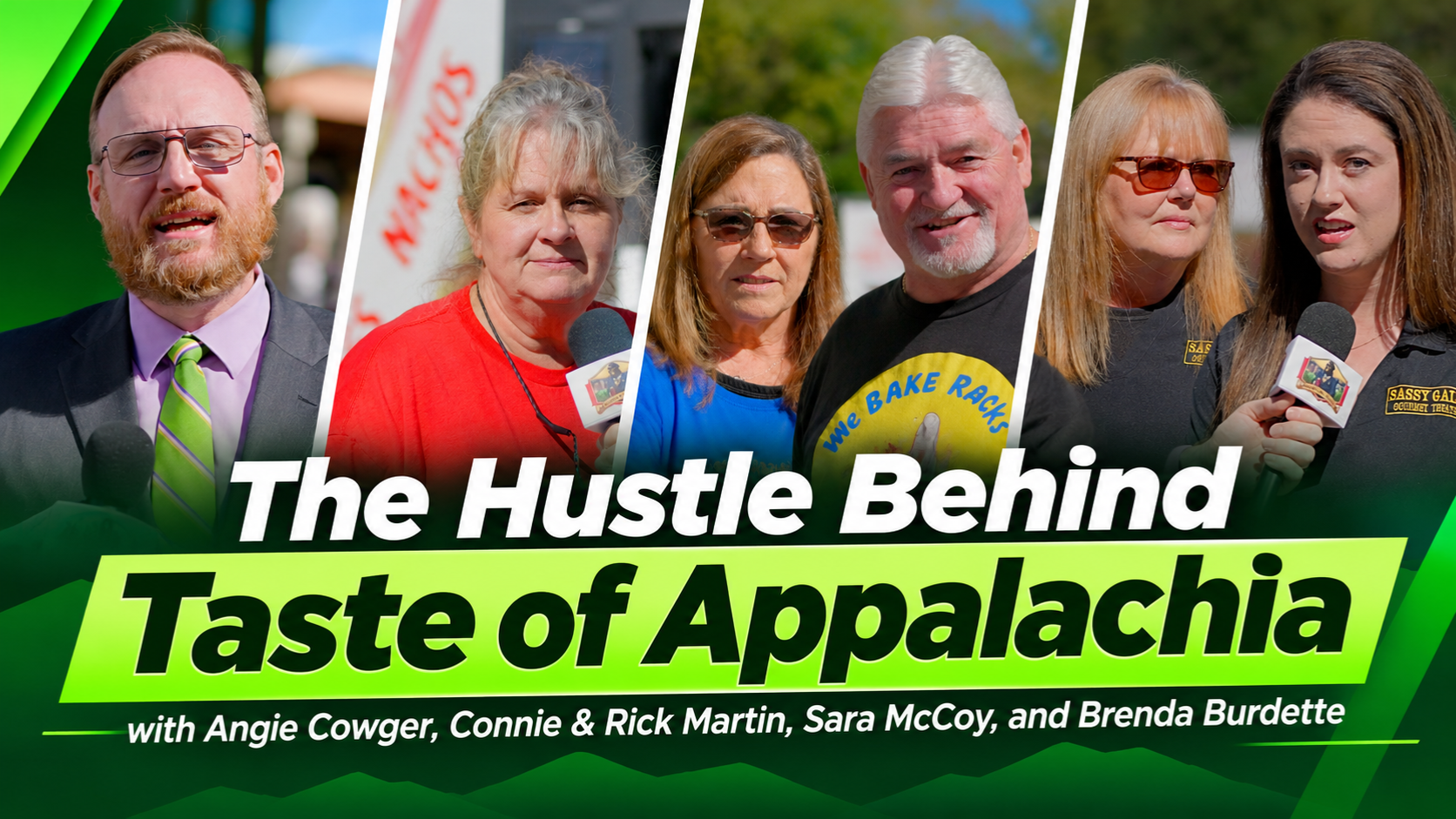
The Hustle Behind Taste of Appalachia with Angie Cowger, Connie & Rick Martin, Sara McCoy, and Brenda Burdette
West Virginia businesses are finding ways to grow, reach customers, and bring their products to markets beyond the state. At the South Charleston Farmers Market, I had the opportunity to talk with several business owners participating in the second annual Taste of Appalachia campaign. Angie Cowger of Custard Stand, Connie and Rick Martin of We B Fryin Snacks, and Sara McCoy and Brenda Burdette of Sassy Gals Gourmet Treats shared how they built their businesses, the challenges they faced, and what they have learned about entrepreneurship. Their experiences show the importance of persistence, relationships, and taking advantage of opportunities to grow.
Angie Cowger and her husband started Custard Stand in a remodeled car wash bay. That beginning came with lessons, including the importance of keeping floor drains available when converting a building for food production. Since then, the company has expanded from its West Virginia roots into a business with restaurants, manufacturing operations, and distribution across much of the eastern United States.
Custard Stand Hot Dog Chili is available in Walmart stores from Maine to Florida and as far west as Louisiana. The company also distributes through Kroger, Sam’s Club, and other retailers. Its growth demonstrates how a business that begins with limited resources can expand into markets across the country.
Custard Stand has continued developing products to meet customer needs. Its newest addition is a spice pack that allows customers to prepare chili using their choice of meat or meat substitute. The product responds to requests for vegetarian options and alternatives without high-fructose corn syrup. It also creates shipping opportunities for customers who cannot receive the company’s prepared chili products, including deployed military personnel. The spice packs are Custard Stand’s first contribution to the Taste of Appalachia gift boxes.
Connie and Rick Martin took a different path into the food business. Their company, We B Fryin Snacks, produces wheat-based snacks with a texture similar to pork rinds. The idea began when they encountered the product at a festival, developed relationships with the people making it, and learned the production process themselves.
They launched their business in January 2020, shortly before COVID-19 disrupted businesses across the country. Despite that challenge, they continued operating and growing. Their current obstacle is production space. They have outgrown their building and must work around its limitations to meet demand.
Their advice to entrepreneurs centers on persistence and using available resources. Connie encourages business owners to keep going when plans do not work out. Rick recommends connecting with business development organizations such as Advantage Valley, which can help entrepreneurs find resources and determine their next steps.
Sara McCoy and Brenda Burdette have spent 14 years building Sassy Gals Gourmet Treats. The company began with roasted pecans and expanded into dip mixes and slush mixes. Its contributions to Taste of Appalachia include bourbon roasted pecans and loaded potato dip mix, which customers can also use to prepare cheese balls.
Fairs and festivals have played a role in building their business and connecting with customers. However, those opportunities also create scheduling and staffing challenges, particularly when multiple events take place during the same weekend.
Sara emphasizes working hard, maintaining a positive attitude, and approaching challenges one step at a time. Brenda encourages entrepreneurs to meet people, build relationships, and take advantage of programs that support business development. Their experience reinforces the value of personal connections in growing a business.
These conversations reveal several lessons that apply to entrepreneurs across industries. Businesses rarely develop according to their original plans. Growth creates problems that require changes in operations, products, and resources. Customer feedback can lead to new opportunities, while relationships and support organizations can help owners overcome obstacles.
Taste of Appalachia brings these businesses together by offering gift boxes featuring products from West Virginia companies. The campaign gives customers a way to purchase gifts while supporting entrepreneurs who contribute to the state’s economy.
What stands out to me is that these business owners share a commitment to continuing their work despite setbacks. Each has taken a different path, but all recognize that building a business requires persistence, adaptation, and relationships. Their experiences offer a reminder that entrepreneurship is not about avoiding problems. It is about finding ways to move forward when those problems arise.