
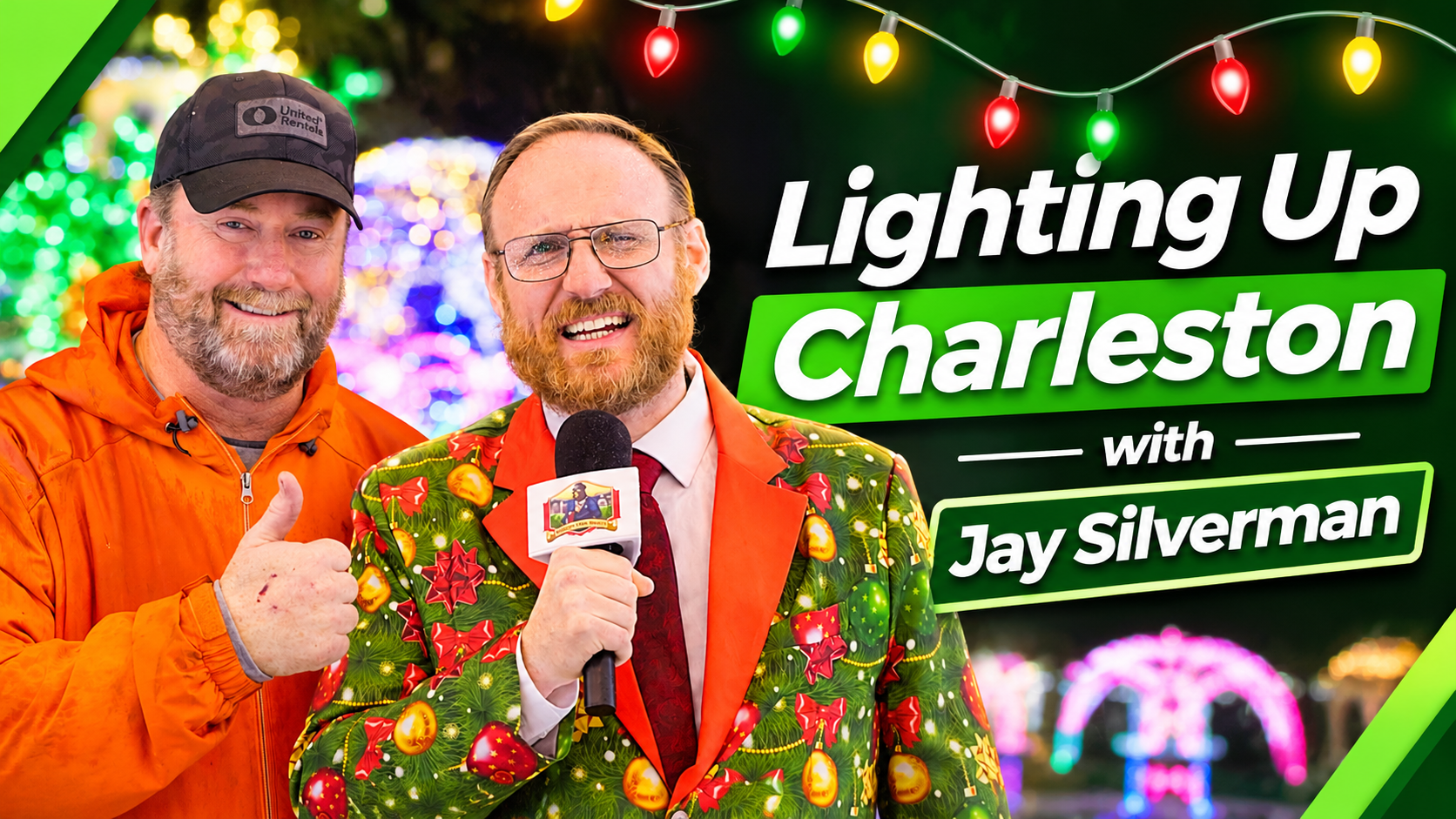
Lighting Up Charleston with Jay Silverman
Light the Night has become more than a holiday attraction in Charleston, West Virginia. With 2.5 million lights, entertainment, food, and activities, the event brings families to GoMart Ballpark while helping support baseball in the city. I spoke with Jay Silverman about how Light the Night started, what it takes to operate an event of this size, and why it plays a role in keeping baseball in Charleston. We also discussed the lessons Jay has learned about teamwork, taking risks, and accepting failure as part of building something that lasts.
Jay has worked in baseball for 20 seasons, but operating a holiday light show brought challenges he had not expected. Working at a ballpark is one thing. Transforming that same facility into an attraction with millions of lights and activities is another. When team owner introduced the idea, Jay had reservations about giving up time during the holidays. Four years later, Light the Night has become part of the ballpark’s operations and a source of revenue.
The idea came from Florence, Kentucky, where the owner visited the Florence Y’alls baseball team and saw its light show. He brought the concept back to Charleston and asked his staff to consider it. The team took a chance, and the event has continued to grow.
One point that stood out during our conversation was how much Light the Night contributes to keeping baseball in Charleston. The team operates in an independent league, which means it does not have access to the revenue that Major League Baseball teams generate. Ticket sales during baseball season alone do not provide everything the organization needs. Events like Light the Night create income that helps support the team and maintain baseball’s presence in the community.
Running an event of this scale requires people who share the commitment to getting things done. Jay learned that having the right team matters as much as having the right idea. When employees are not prepared to put in the work, tasks fall behind, and preparations can continue right up to opening day. Building a team that takes ownership of the work has become one of his lessons.
We also discussed the cost of attending Light the Night. Jay recognizes that some people believe the event is expensive, but he points to options for visitors who want to enjoy the lights without purchasing every attraction. Half Off Mondays and purchasing tickets online provide ways to save money. Visitors can experience the event without spending a fortune.
Each year, the team makes changes to give people reasons to return. This season includes an expanded bumper car area, changes to the light displays, and more places for families to sit and spend time together. Food and beverage stands are located throughout the field, offering hot chocolate, meals, and snacks.
Some traditions remain at the center of the experience. The infield light show continues to be one of the attractions, with music added each year. Jay recommends finding a place to sit, enjoying some hot cocoa, and watching the display. He also points visitors toward the Mother Earth section and a viewing area with picnic tables.
During our rapid-fire questions, Jay shared some of the purchases and mistakes involved in putting the event together. One purchase was a set of Nightmare Before Christmas displays that cost less than $100. On the other hand, he once purchased 10,000 zip ties when the project required only about 2,000. It was a reminder that even after years of experience, estimating what a project needs can be difficult.
We ended our conversation with a principle that applies far beyond baseball or holiday attractions. Jay believes people need to accept that mistakes and failures are part of the process. Not every decision works out, and not every idea succeeds. But without taking chances, opportunities like Light the Night might never happen.
For me, Light the Night demonstrates what can happen when a business finds ways to use its resources beyond its original purpose. A baseball stadium becomes a holiday destination, an event creates revenue that supports another operation, and a team learns through experience. The lesson is to keep experimenting, surround yourself with people willing to do the work, and recognize that failure is part of building something worth continuing.