
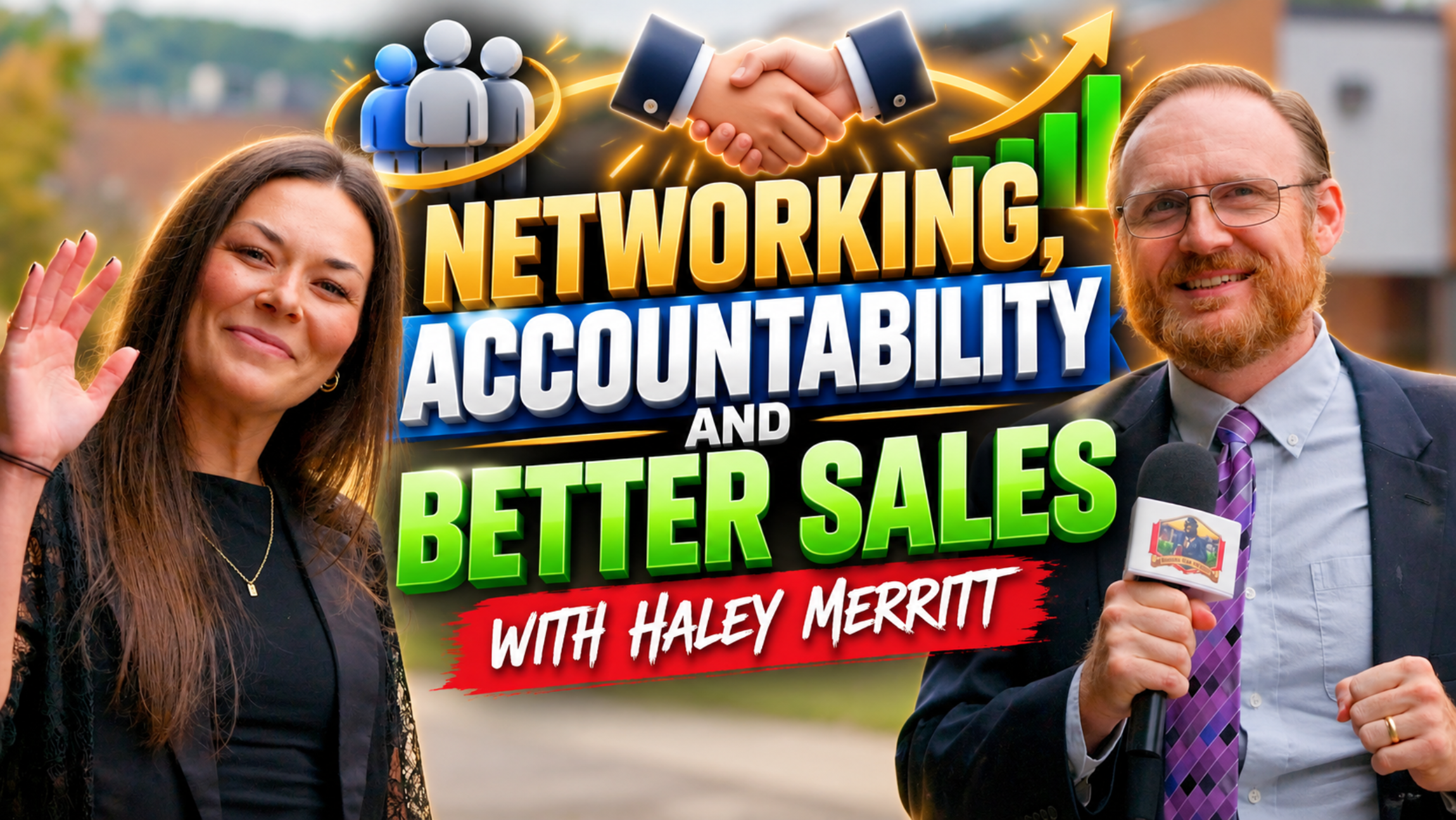
Networking, Accountability and Better Sales with Haley Merritt
My conversation with Haley Merritt focuses on what sales looks like once you move past the idea of pitching products and start building relationships. Haley works as an account manager at ProSource, where she helps businesses with office equipment, printing, document management, and other technology needs. Much of our discussion centers on how her understanding of sales changed once she entered business-to-business sales and learned that people are rarely waiting for someone to walk through the door and sell them something. Instead, earning business takes trust, networking, listening, and time.
Haley entered sales believing that potential customers would already have an interest in the product being offered. That expectation changed once she began approaching businesses. In retail, customers enter a store because they already have some intention of making a purchase. B2B sales works in another way. A salesperson may be entering someone’s workplace in the middle of their day without an invitation. Haley learned that starting with a prepared sales pitch did not create the conversations she wanted.
One of the first changes she made was to stop relying on a rehearsed pitch. She had spent time preparing what she planned to tell prospects, only to discover that many of the people hearing the pitch were not decision makers or were not interested in hearing a sales presentation at that moment. She began focusing on being herself, having conversations, and developing relationships instead. Networking became a large part of that approach. Her goal shifted from trying to close a sale during the first conversation to building connections with people who may contact her when a need develops.
We also discuss changes within the office equipment and printing industry. While businesses continue moving toward document automation, Haley points out that printing has not disappeared. Manufacturing companies still need invoices, inventory documents, shipping materials, and other printed information. The opportunity is not limited to asking businesses how much they print. It involves understanding what they produce, what they outsource, what those processes cost, and whether some of that work could be handled in-house.
That leads into one of the common misconceptions surrounding printing: many businesses do not realize how much it costs them over time. A few unnecessary copies may not appear significant, but those expenses add up across departments and throughout a year. Some spending may also take place outside the people responsible for purchasing, which makes the total harder to see. This reinforces a point I believe applies across business: you have to understand your numbers and margins. Identifying waste and improving processes can create savings without requiring cuts that affect the operation.
Networking continues to play a role in Haley’s development. She points to her investment in Business Network International as money well spent because it gives her a place to build relationships, practice talking about her business, and learn more about how she can serve other companies. Rather than viewing mistakes or time spent pursuing the wrong opportunities as wasted effort, she looks for lessons and relationships that came from those experiences. I agree with that approach. If you learn from a mistake, there is still value in making it.
Accountability is another skill Haley believes every salesperson should develop. That means setting a standard for yourself while also allowing other people to hold you to it. Being challenged can be uncomfortable, but growth often requires hearing when something needs to change.
One skill she continues working on is knowing when to stop talking and listen. That lesson connects to much of our conversation. Sales is not about delivering the perfect speech. It is about understanding people, their businesses, and the problems they are trying to solve.
The main lesson from my conversation with Haley is that sales becomes more effective when the focus moves from pitching to relationships. Networking creates connections. Listening helps uncover needs. Accountability encourages improvement. Mistakes create lessons when we are willing to learn from them. Technology and industries will continue to change, but the ability to understand people and help solve their problems remains at the center of doing business. As Haley puts it, practice may not always make perfect, but practice does make you better.