
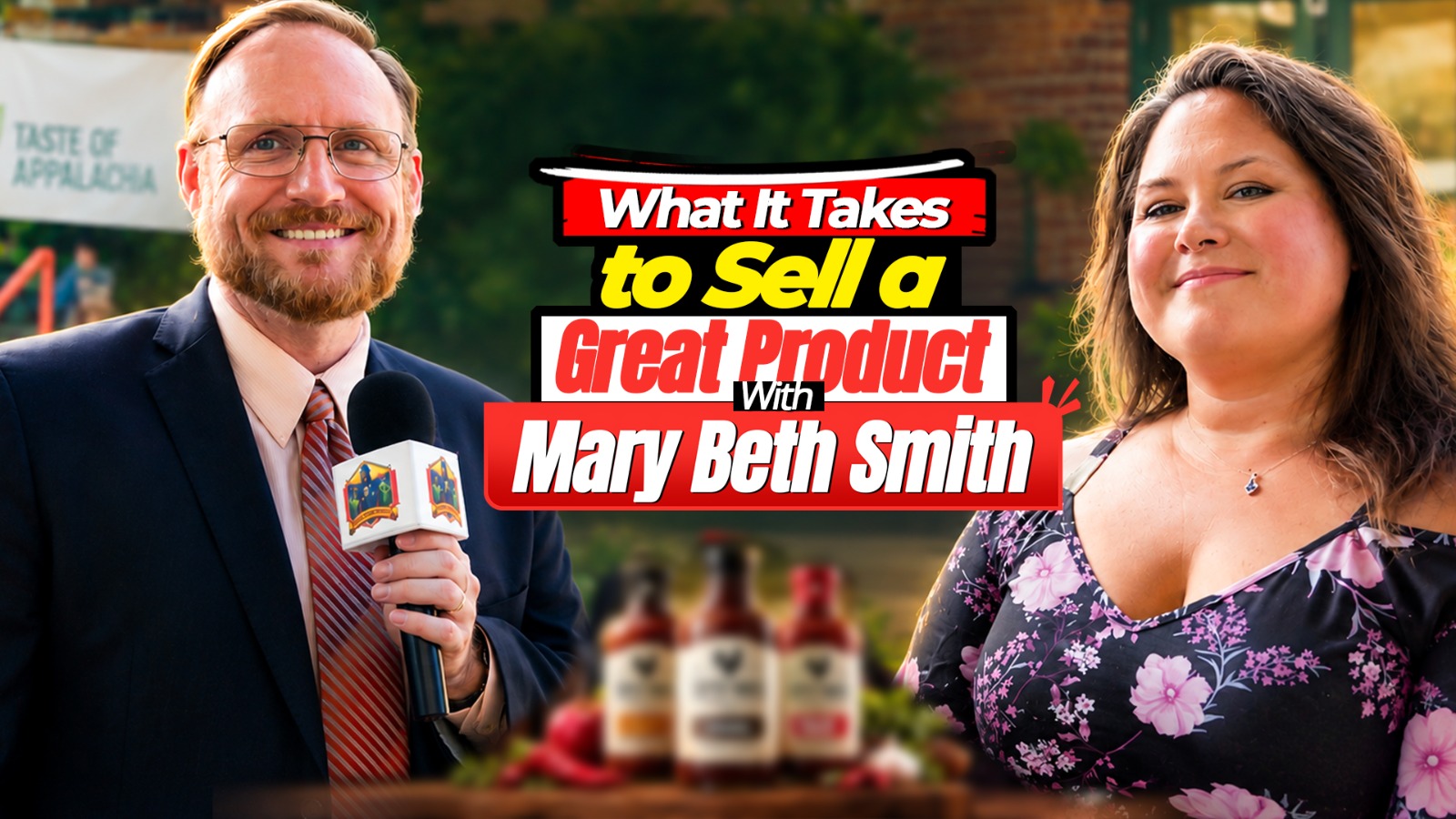
What It Takes to Sell a Great Product with Mary Beth Smith
In this episode of Kanawha Valley Hustlers, I talk with Mary Beth Smith, co-owner and co-founder of Tipsy Roo’s Barbecue Sauce, about what it takes to build a product-based business. Our conversation focuses on the gap between what people expect when they start a company and what happens once they begin trying to sell. Mary Beth explains that creating a product is only one part of the work. Business owners also have to promote it, meet customers, attend events, offer samples, build relationships, and keep showing up. Her experience with Tipsy Roo’s shows how direct contact with customers can turn into sales and business growth.
Tipsy Roo’s is a veteran-owned company that makes barbecue sauces using alcohol as part of the recipes. Mary Beth explains that the company offers several flavors and has added Drunken Johnny’s, an apple, chipotle, and whiskey sauce, along with Hellfire Hooch, a bourbon sauce with heat. The business began in 2020, but the owners started putting more effort into sales and promotion around 2021 and 2022.
Much of our conversation centers on the Taste of Appalachia program. Mary Beth participated in the program last year and did not know what kind of response to expect. Tipsy Roo’s products ended up appearing in four of the six gift boxes offered through the program. Those sales accounted for about half of the company’s sales for the year.
Taste of Appalachia gives consumers a way to find products made by food businesses across West Virginia and Appalachia. The products are packaged into gift boxes, which creates another sales channel for businesses that customers may not find on their own. Mary Beth has worked with groups connected to the program, including FAST West Virginia and Advantage Valley, which helped create opportunities for her company to take part.
When I ask what has produced the most value for her business, Mary Beth points to events. Paying event fees gives Tipsy Roo’s access to customers who can meet the owners, ask questions, and sample the sauces. She believes business owners need to get in front of people instead of waiting for customers to discover them.
Looking back, she would put even more time into this type of outreach. That includes speaking with store managers about sampling products outside their locations and approaching schools or organizations that may have a use for what the company sells. Tipsy Roo’s also prepares pulled pork, which creates opportunities to supply concession stands and other groups.
Mary Beth identifies communication and belief in the product as skills entrepreneurs need. Running a business often requires doing things that may feel uncomfortable, including starting conversations, promoting products, and speaking in front of groups. Public speaking is one of the skills she is working to improve because it supports the work of introducing the company to more people.
She also believes business owners need to stand behind the quality of what they sell. That means understanding what goes into the product, maintaining standards, and continuing to promote it even when progress takes time.
My conversation with Mary Beth shows that entrepreneurship requires more than having something to sell. A business grows when people know the product exists, understand why they should try it, and have opportunities to experience it. Tipsy Roo’s has built momentum through events, sampling, partnerships, and direct conversations with customers. The lesson is simple: creating the product starts the business, but getting in front of people is what gives the product a chance to sell.