
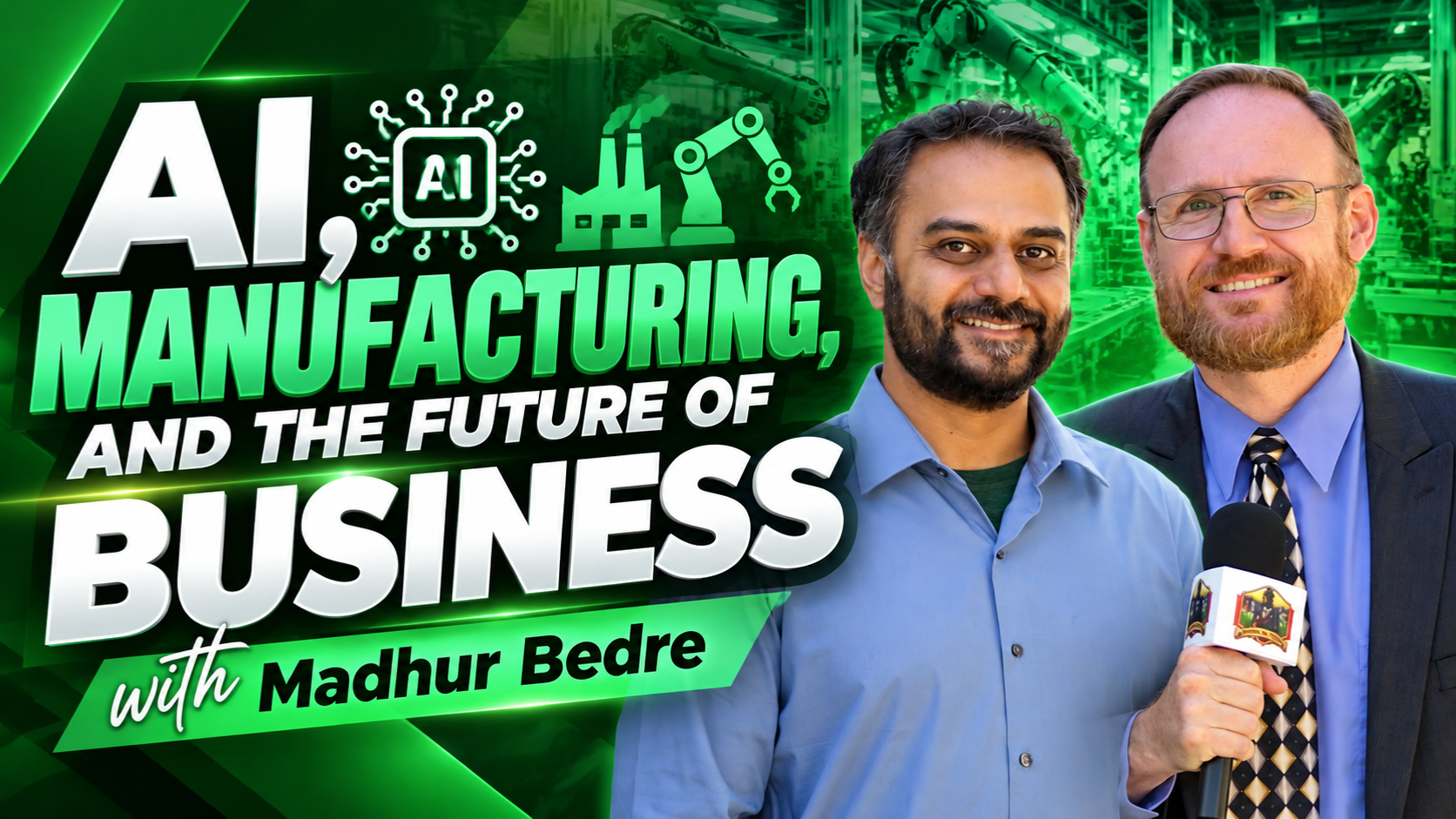
AI, Manufacturing, and the Future of Business with Madhur Bedre
Building a business takes more than having expertise in an industry. It requires making decisions, learning from mistakes, developing relationships, and adapting when circumstances change. In this episode of Kanawha Valley Hustlers, I chat with Madhur Bedre to discuss his experience building a company that helps manufacturers improve production through process control and artificial intelligence. We explore the challenges of entrepreneurship, the role of technology in manufacturing, and the importance of building a network of people who can help along the way.
Madhur has spent about 15 years working in process control, including time working in Charleston before starting his company seven years ago. His business works with manufacturers around the world, including companies in the chemical industry, to solve problems involving production, quality, and equipment utilization.
Process control focuses on helping manufacturers get more out of their existing equipment and operations. That might mean improving production output, addressing quality issues, or adjusting systems to meet performance targets. His company uses modeling, process control technology, and other engineering methods to help organizations address these challenges.
Artificial intelligence has become another part of the business over the past two years. Rather than allowing AI to make changes to manufacturing operations on its own, Madhur’s company uses it to support the people managing those systems. AI provides information and recommendations that help engineers and plant operators make decisions. The goal is to improve how manufacturers use their equipment and resources while keeping people responsible for operational decisions.
When manufacturers cannot solve problems with their existing resources, Madhur’s team often steps in to help. He describes the company as Plan B, the organization businesses call when they need help finding a solution.
Madhur admits he knew little about running a business when he started. Over seven years, he has faced challenges involving hiring, negotiations, planning, and developing processes that support the company. Some decisions worked, while others created problems that required changes.
I think this is something entrepreneurs need to hear. Business owners can look at other companies and assume everyone else has figured things out. The reality is that mistakes are part of running a business, regardless of how much experience someone has. Madhur has found value in talking with other entrepreneurs, sharing experiences, and asking how they would approach certain situations. Even business owners with decades of experience continue to encounter problems they have never faced before.
We also discuss challenges affecting manufacturing in 2026. Madhur identifies two concerns: economic pressures and employee retention. Changes in supply and demand have affected the chemical and plastics industries, creating conditions businesses cannot control. At the same time, the growth of AI has created opportunities for employees with manufacturing and engineering experience. Companies developing AI technology are recruiting people who understand how these industries operate, making retention a concern for employers.
Despite those challenges, AI has also created opportunities for Madhur’s company.
Looking back, Madhur identifies time spent pursuing customer relationships without alignment as one of his mistakes. Rather than recognizing that certain customers were not a fit, the company continued trying to make those relationships work. That experience reinforced the importance of knowing when to move on.
Adaptability is another lesson Madhur considers important. Entrepreneurs need to recognize when circumstances are changing and adjust their approach. For him, that has included developing skills outside his engineering background. Sales and marketing have become areas of focus over the past 18 months as he works to support the company’s growth.
We close with Madhur’s belief that pursuing something with commitment can create opportunities to achieve it. His involvement in organizations and events throughout the Kanawha Valley reflects the value he places on relationships and community engagement.
Our discussion reinforces several lessons about entrepreneurship. Expertise can provide the foundation for a business, but success also depends on planning, people, processes, and the ability to adapt. Mistakes are unavoidable, relationships provide support, and some factors will remain outside an owner’s control. What matters is learning from those experiences, making decisions about where to invest time and resources, and continuing to move toward the goals that make the work worthwhile.